A healthy, confident smile plays a vital role in overall well-being and self-esteem. Unfortunately, teeth can weaken, break, or discolor over time due to decay, injury, or lifestyle habits. This is where dental crowns come in—a trusted solution to restore the function, strength, and appearance of damaged teeth. In this article, we’ll explore how dental crowns work, the different types available, and why they are a reliable choice for long-term dental care.
What Are Dental Crowns?
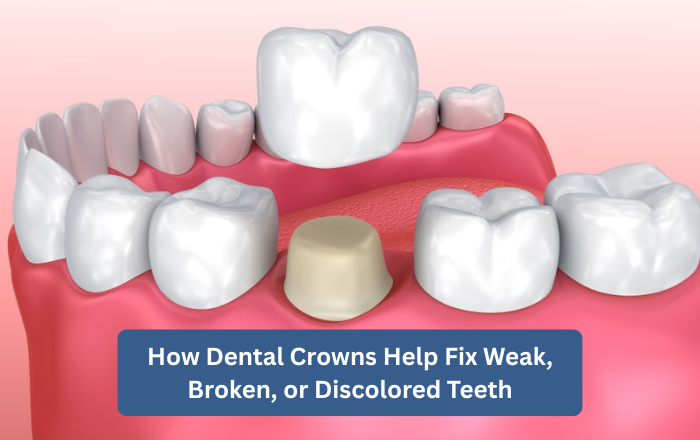
Dental crowns, often referred to as “caps,” are custom-made coverings designed to fit over damaged teeth. They encase the entire visible portion of the tooth above the gum line, providing structural support and protecting it from further damage. Crowns are made from various materials such as porcelain, ceramic, metal alloys, or a combination of these, ensuring durability while closely mimicking natural teeth.
The main purpose of a dental crown is to restore a tooth’s function, shape, and appearance. Whether a tooth is weak due to decay, fractured from trauma, or severely discolored, crowns offer an effective solution that can last for many years with proper care.
How Dental Crowns Strengthen Weak Teeth
Weak teeth are often caused by extensive decay, large fillings, or root canal treatment. When the natural tooth structure is compromised, chewing and biting can become painful or lead to further damage. Dental crowns act as a protective shield, distributing bite pressure evenly across the tooth.
By covering a weakened tooth completely, crowns prevent it from cracking or breaking under normal daily stress. This reinforcement not only improves functionality but also reduces sensitivity and discomfort. In essence, a dental crown transforms a fragile tooth into a durable, reliable one capable of handling everyday tasks without pain.
Repairing Broken or Chipped Teeth with Crowns
Accidents, sports injuries, or chewing hard foods can result in broken or chipped teeth. Even minor fractures can lead to discomfort and an increased risk of decay. Dental crowns are a go-to solution for such cases, restoring both the structure and appearance of the tooth.
The process involves reshaping the damaged tooth to fit the crown perfectly. Once the crown is placed and bonded, it effectively restores the tooth’s shape, size, and strength. Patients can regain a fully functional bite while maintaining a natural-looking smile.
Fixing Discolored or Misshapen Teeth
Some teeth may be discolored due to stains, trauma, or previous dental treatments. Others might be misshapen or uneven, affecting the overall aesthetics of the smile. Dental crowns offer a cosmetic solution by providing a uniform, natural appearance.
Porcelain or ceramic crowns are particularly popular for front teeth because they can be color-matched to blend seamlessly with surrounding teeth. Whether your concern is stubborn discoloration, worn edges, or irregular shapes, crowns provide an effective way to achieve a bright, symmetrical smile without invasive procedures.
The Dental Crown Procedure: Step by Step
Getting a dental crown typically involves a few key steps:
• Initial Consultation and Examination: The dentist evaluates the tooth’s condition and determines whether a crown is the best solution. X-rays may be taken to assess the tooth and surrounding bone structure.
• Tooth Preparation: The dentist reshapes the tooth to create enough space for the crown. If decay is present, it is removed, and a buildup may be performed to strengthen the base.
• Impressions and Temporary Crown: Impressions of the prepared tooth are taken to create a custom crown. Meanwhile, a temporary crown protects the tooth.
• Crown Placement: Once the permanent crown is ready, it is checked for fit, color, and bite alignment before being permanently cemented onto the tooth.
The entire process is designed to be precise, comfortable, and minimally invasive, ensuring optimal results.
Benefits of Dental Crowns
Dental crowns offer a wide range of benefits beyond restoring a damaged tooth. These include:
• Enhanced Strength: Crowns reinforce weakened teeth, preventing further damage.
• Improved Appearance: They restore natural shape, size, and color, enhancing your smile.
• Long-Lasting Solution: With proper care, crowns can last 10–15 years or more.
• Protection Against Decay: Crowns cover the tooth entirely, reducing exposure to bacteria.
• Restoration of Function: They allow normal chewing, speaking, and biting without discomfort.
Maintaining Your Dental Crowns
To ensure longevity, proper care of dental crowns is essential. Regular brushing and flossing, along with routine dental check-ups, help prevent decay at the margins of the crown. Avoiding extremely hard foods and habits like nail-biting or teeth grinding can also prolong the life of your crown.
When to Consider a Dental Crown
If you experience any of the following, it might be time to consult your dentist about a crown:
• Cracked, chipped, or broken teeth
• Extensive decay or weakened teeth
• Discoloration or misshapen teeth affecting your smile
• Tooth after root canal treatment
Crowns are a versatile solution for both functional and aesthetic dental needs.
Conclusion
Dental crowns are a reliable solution for restoring weak, broken, or discolored teeth. They not only strengthen and protect your teeth but also enhance your smile and overall oral health. For expert care and lasting results, you can visit Smile Curve Dental Clinic in Kharadi, led by Dr. Saswati Sahu, where advanced techniques and personalized attention ensure a confident, healthy smile.
FAQs About Dental Crowns
1. How long do dental crowns last?
With proper care, dental crowns can last anywhere from 10 to 15 years, and sometimes even longer depending on material and oral hygiene.
2. Is getting a dental crown painful?
The procedure is usually painless, as local anesthesia is used. Some patients may experience mild sensitivity for a few days after placement.
3. Can a crown be removed or replaced?
Yes, crowns can be removed or replaced if damaged, decayed beneath the crown, or if they no longer fit properly.
4. Are dental crowns noticeable?
Modern crowns are made from porcelain or ceramic and can be color-matched to your natural teeth, making them virtually indistinguishable.
5. Can I eat normally with a crown?
Yes, once the crown is securely placed, you can chew and bite normally. Avoid excessively hard foods to ensure longevity.